How to Calculate the Right Tank Size for Your Auckland Lifestyle Block

TL;DR
Choosing the right water tank size is one of the most important decisions you'll make when setting up a lifestyle block in Auckland. Get it wrong and you'll either run dry over summer or spend money on more tank than you need. In this post, you'll learn how to calculate the water tank capacity your block actually needs, what factors affect storage requirements, and how to make sure you're covered through dry spells.
How Much Water Does a Lifestyle Block Actually Use?
Start with people. The average New Zealand household uses around 150 litres of water per person per day. A family of four will use roughly 600 litres daily. Over a month, that adds up to around 18,000 litres just for household use.
But lifestyle blocks use more than homes in town. If you have a garden, orchard, or animals to water, your daily use climbs fast. A small vegetable garden can add several hundred litres per week in dry weather. Livestock adds even more. A single horse drinks around 40 litres a day, and cattle need considerably more.
Think about your block honestly. List everything that needs water: the house, the garden, the animals, and any extra uses like a workshop or washdown area. Add those numbers up to get your real daily usage figure, not just the household average.
What Tank Size Do You Actually Need?
Once you know your daily usage, the general rule is to store enough water to cover 30 to 60 days without rainfall. This protects you through an Auckland dry spell, which can run for several weeks over summer.
For a family of four on a lifestyle block with a garden and a few animals, daily usage might sit around 1,000 to 1,500 litres. At 30 days' storage, that means you need at least 30,000 to 45,000 litres of tank capacity. Most lifestyle blocks in Franklin are set up with somewhere between 25,000 and 50,000 litres across one or more tanks.
It is always worth going slightly larger than your calculation suggests. Tank capacity is fixed once the tank is installed, but your needs can grow. Adding animals, extending a garden, or having family move onto the block will all increase your demand. Building in a buffer from the start is much easier than retrofitting later.
Roof catchment area also plays a role. Your tank fills from rainwater collected off your roof. A larger roof feeds a tank faster, but this does not reduce how much you need to store. It just affects how quickly you can refill after use or after a dry period. Most rural properties in the Franklin district have enough roof area to keep a well-sized tank topped up through normal Auckland rainfall patterns.
What Happens When Your Tank Runs Low?
Even with a well-sized tank, dry summers can push water levels down further than expected. That is completely normal, and it is not a sign that your system has failed. It is simply a part of living rurally in New Zealand.
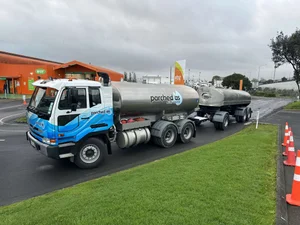
When your tank drops low, bulk water delivery is the fastest and most reliable way to top it up. Parched As delivers fresh, clean drinking water to lifestyle blocks across the Franklin area, including Pukekohe, Papakura, Drury, Waiuku, Pokeno, Karaka, and Hunua. You do not need to wait until you are out of water. Many of our customers book a top-up delivery as a regular part of managing their block through the warmer months.
Getting the right tank size is the foundation of good water management on a lifestyle block. Once you have your storage sorted, keeping it topped up is the easy part. If you are not sure how much your block needs, or you want to talk through your setup, we are happy to help.